

Tea · Making · 4 min
What Does Withering Do in Fuding White Tea?
Fuding white tea is shaped by withering and drying. ‘Not pan-fired or rolled’ does not mean the leaves are simply abandoned to dry.
Essays on Chinese craft, tea and incense traditions, and the small daily rituals that shape a quieter home.
Tea · Making · 4 min
Fuding white tea is shaped by withering and drying. ‘Not pan-fired or rolled’ does not mean the leaves are simply abandoned to dry.

Tea · Making · 4 min
Shaking is one part of Anxi Tieguanyin's leaf-handling sequence. The maker watches the leaf and weather before applying heat to stop further change.

Tea · Process comparison · 4 min
Enshi Yulu and West Lake Longjing are both green teas, yet their recorded early heat treatments differ: steam for one, a pan for the other.

Incense · Form · 3 min
An incense seal makes a continuous line of powder into a character or pattern. The mould shapes the path that burns; it is not the fuel itself.

Tea · Making · 4 min
In the recorded Wuyi rock tea tradition, prolonged lower-temperature baking is one of several connected making stages. Roast alone does not explain the tea.

Tea · Making · 4 min
West Lake Longjing is a green tea shaped through a local pan-firing tradition. The work changes both the leaf's processing path and its familiar flat form.

Incense · Object study · 4 min
A Tang silver incense sphere used nested moving rings to keep its inner cup level while the outer ball turned.
Incense · Textile craft · 4 min
A Xuzhou xiangbao carries fragrant material inside an embroidered pouch. Its scent comes without lighting the object.

Tea · History · 4 min
Diancha starts with fine tea powder in a bowl: water is added and the mixture is worked with a whisk or spoon. It differs from steeping loose leaves.

Tea · Living tradition · 4 min
Chaozhou gongfu tea is a documented Chaoshan custom centred on preparing and sharing oolong tea; its formal sequence is one record of a living practice.
Incense · Method · 4 min
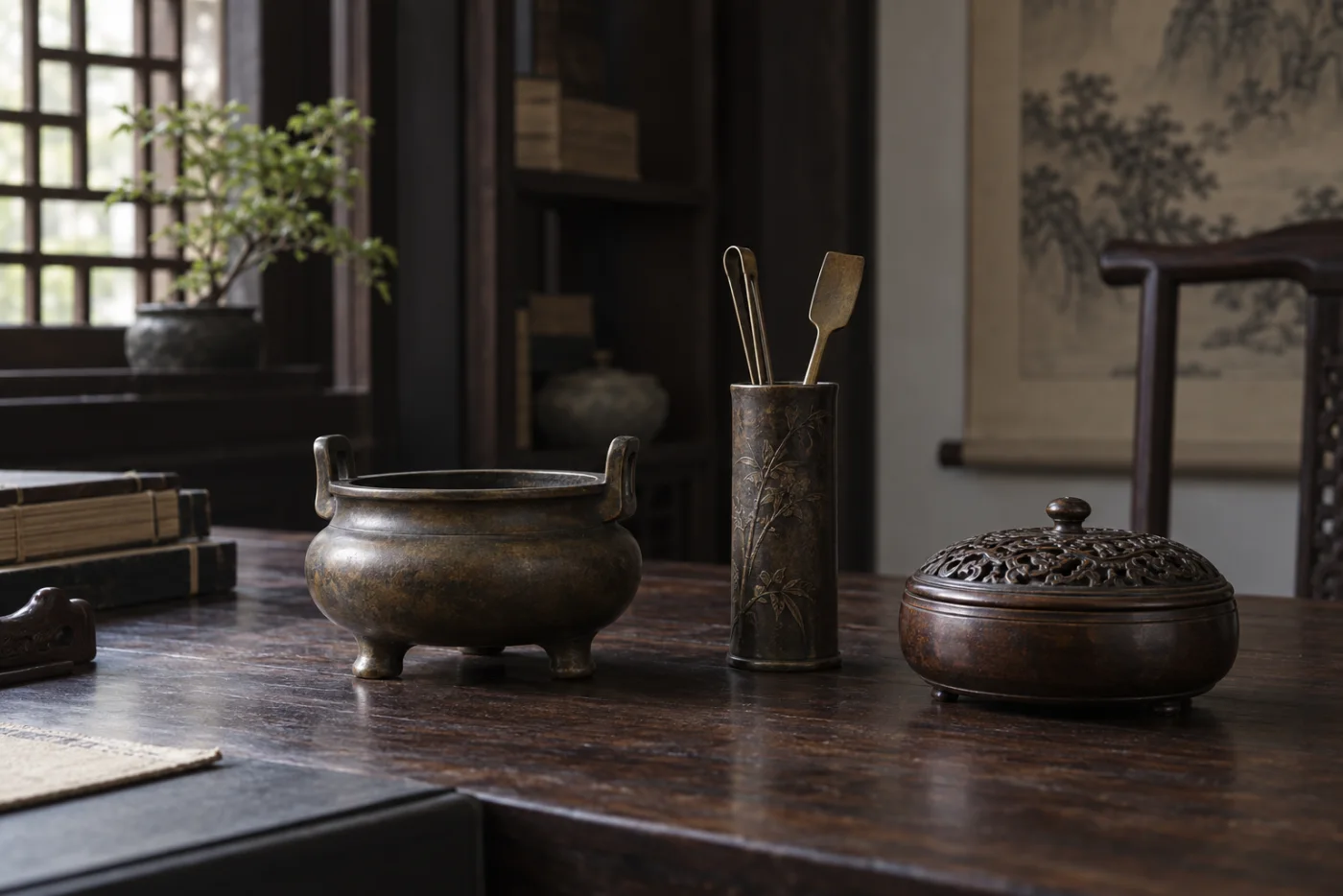
Gehuo xunxiang places a barrier between a heated source and aromatic material. The distinction explains why it is not the same as lighting a stick.
Incense · Object study · 4 min
The mountain-shaped lid of a boshanlu made drifting incense smoke part of a Han vision of an immortal landscape.

Tea · 3 min
Fuzhou jasmine tea is made by bringing prepared tea and fresh flowers together, then separating them. The fragrance is made in the tea, not simply scattered on top.

Tea · 5 min
There is no universal water temperature or steeping time. Start with the tea's processing style, the producer's advice and the vessel you actually use.
Tea · 4 min
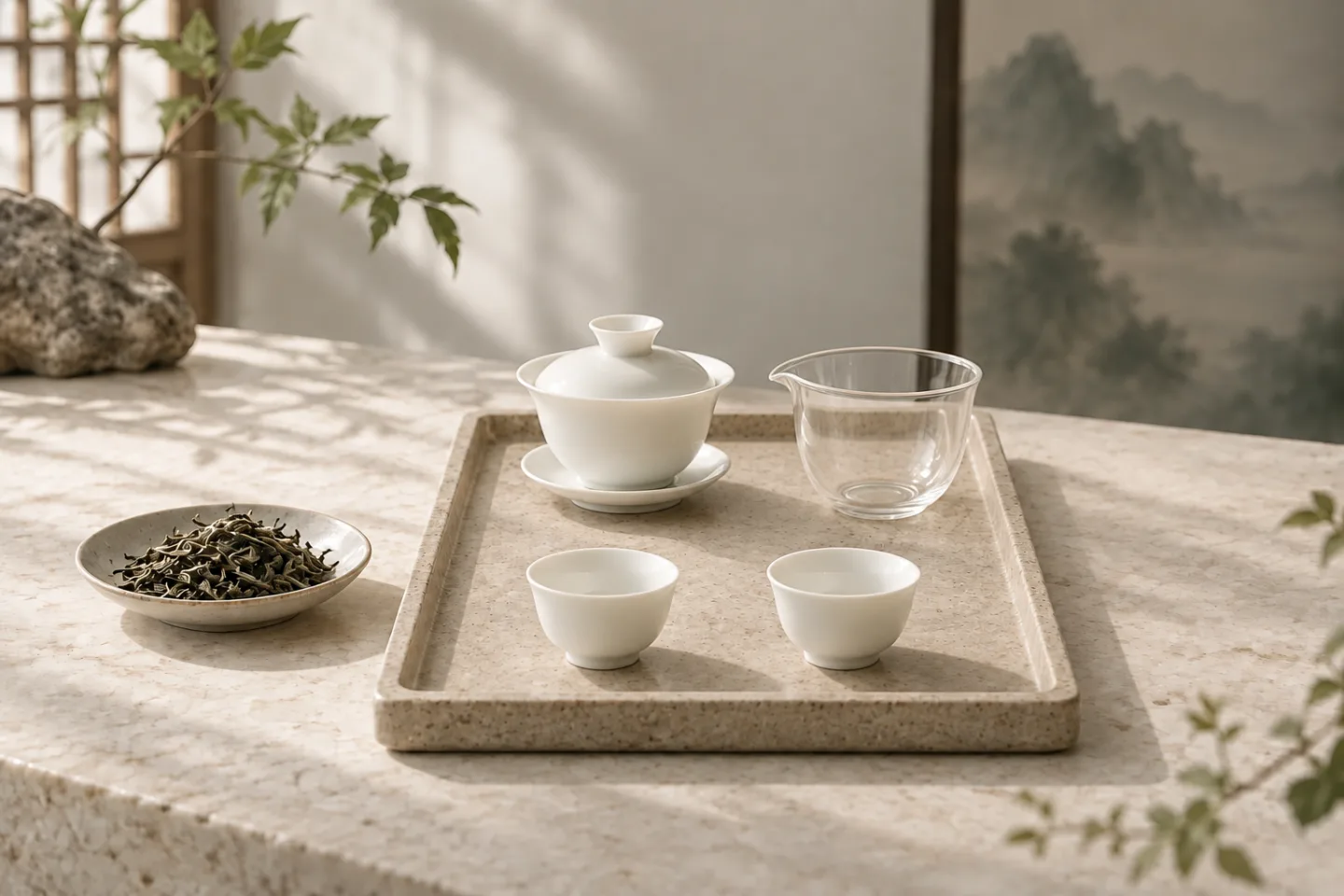
Green, white, yellow, oolong, red and dark teas are differentiated chiefly by processing. Leaf colour or an English label alone can mislead.

Incense · 4 min
Different incense shapes need different supports. Identify the form first, then use a stable heat-resistant holder that catches ash and suits the maker's instructions.
Craft · 3 min
Follow one documented Fujian tradition from aromatic material to a finished form, without treating it as the recipe for every Chinese incense.
Incense · 3 min
Agarwood is a fragrant material from a tree; guanxiang is a Dongguan tradition within that larger story. The names describe different things.
Architecture · 3 min
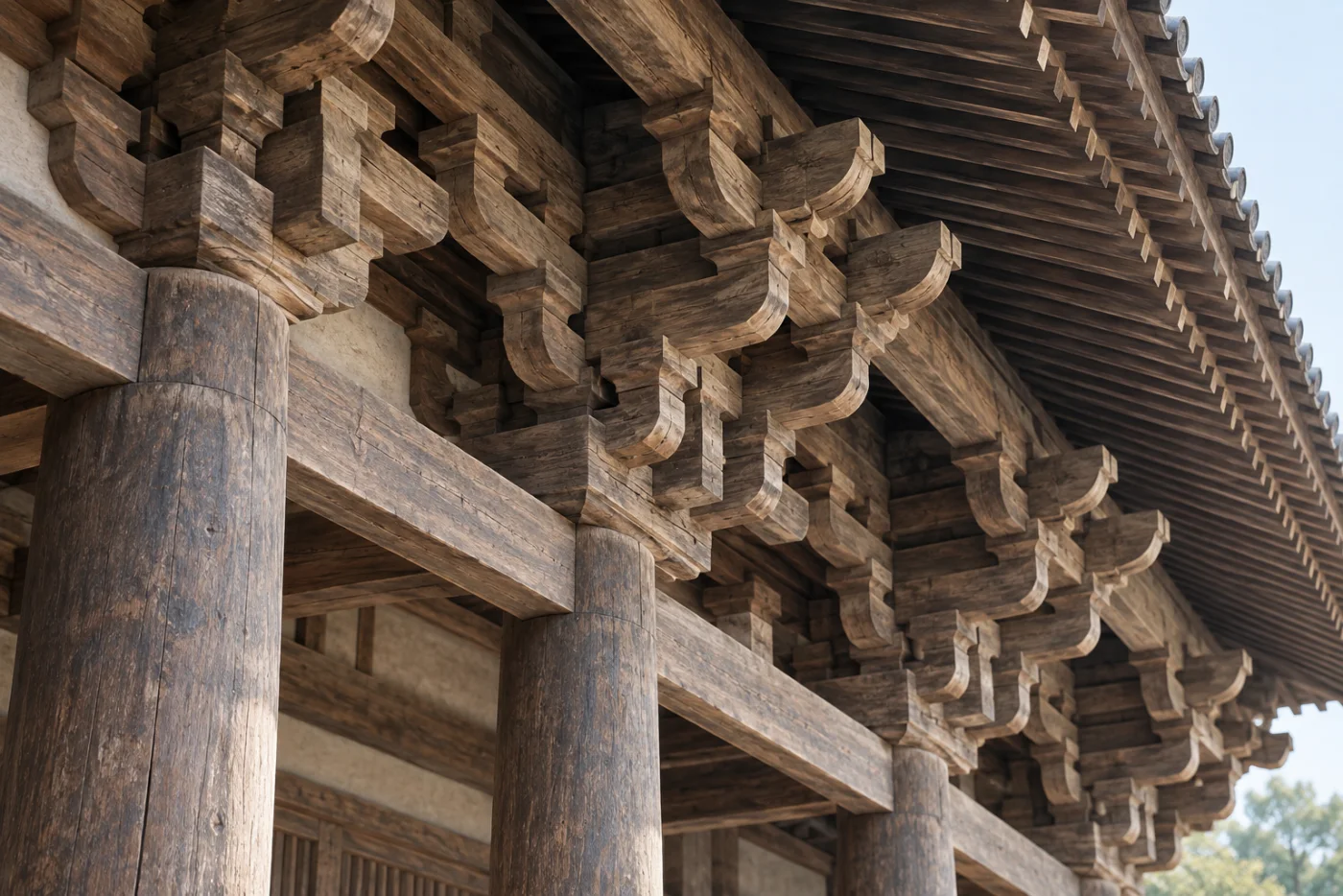
Dougong is a layered bracket assembly under the eaves of some Chinese timber buildings. Its role and appearance changed over time.
Painting · 3 min
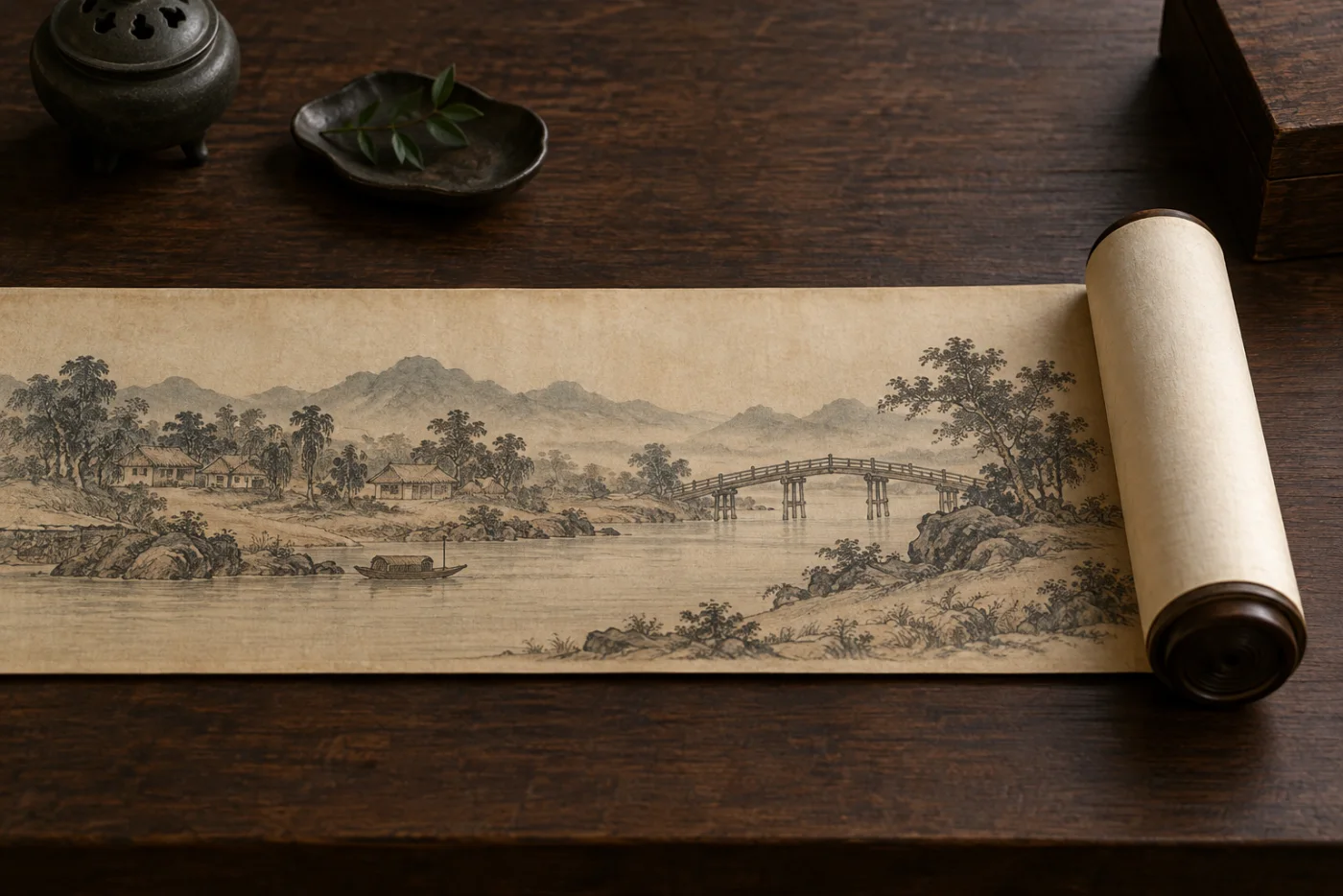
A handscroll is read across a changing view, not taken in at once. Its format helps explain why a painted journey unfolds in time.
Architecture · 4 min
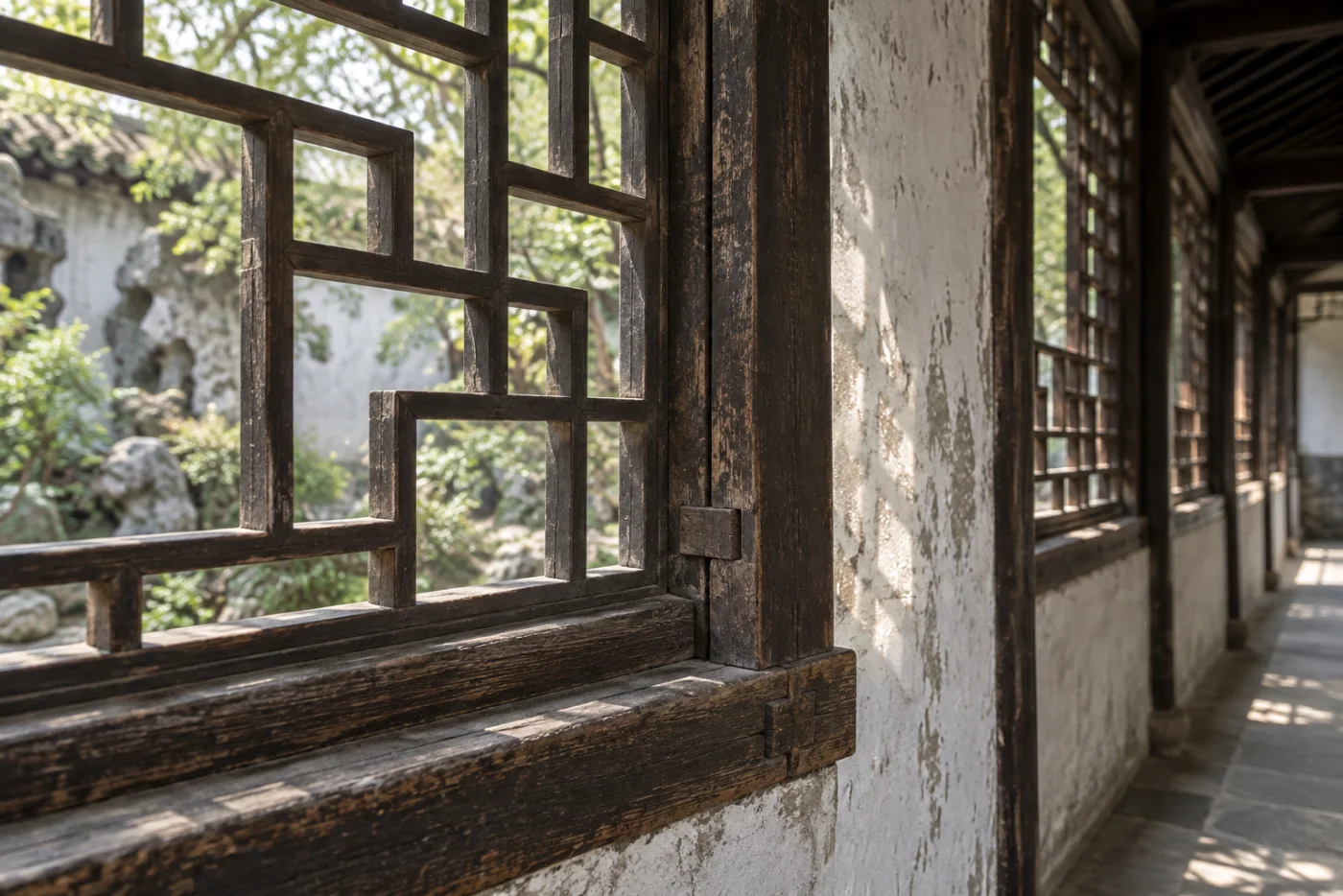
Wooden windows in Suzhou gardens manage light, air and movement as well as the view. Their construction is part of the experience.
Incense · 3 min
Historic incense vessels did different jobs. A burner held the fire, a box stored fragrant material, and utensils helped tend it.
Landscape · 3 min
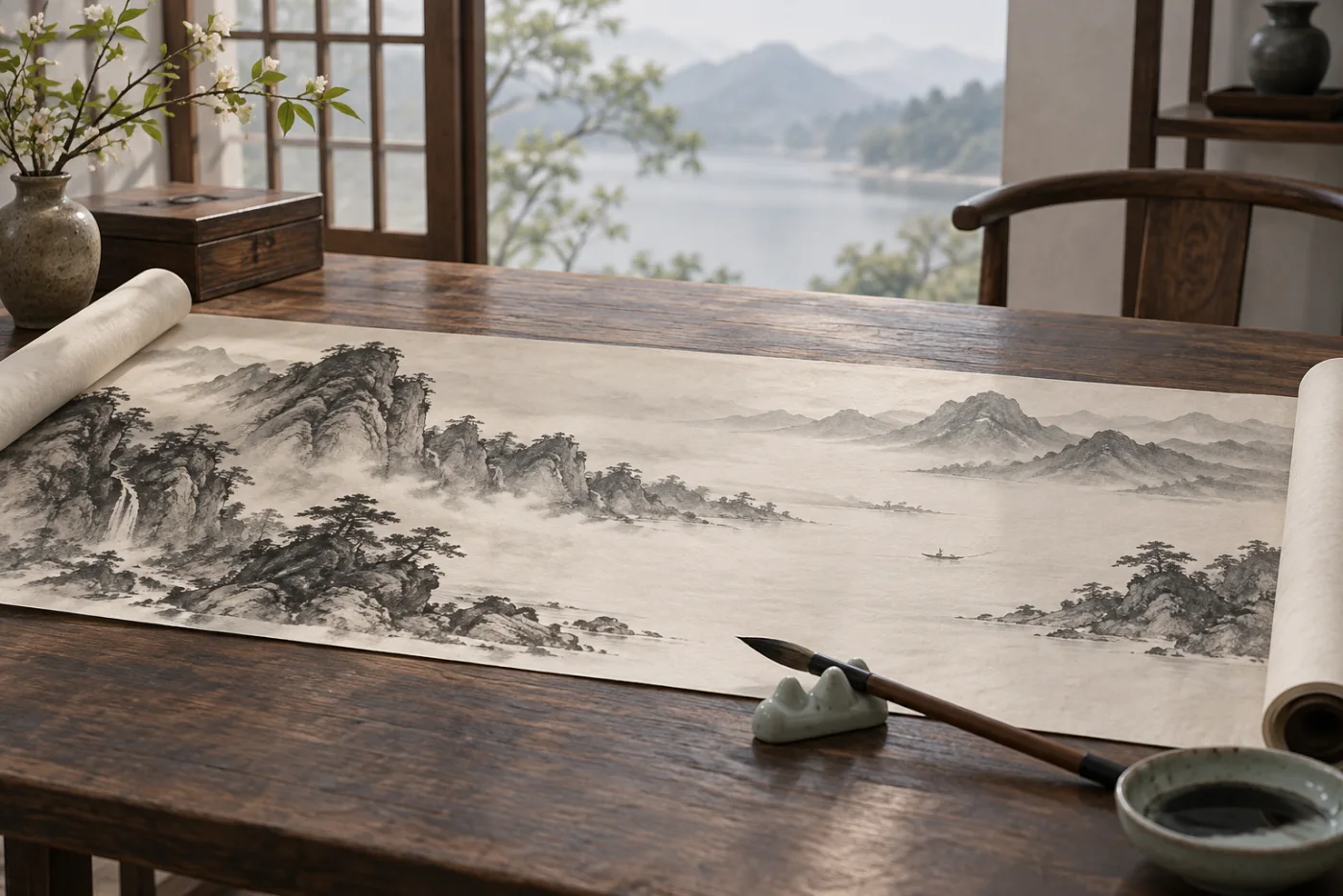
An unpainted passage can suggest water or mist and give mountains room to recede. One Palace Museum painting offers a concrete way to see it.
Study · 3 min
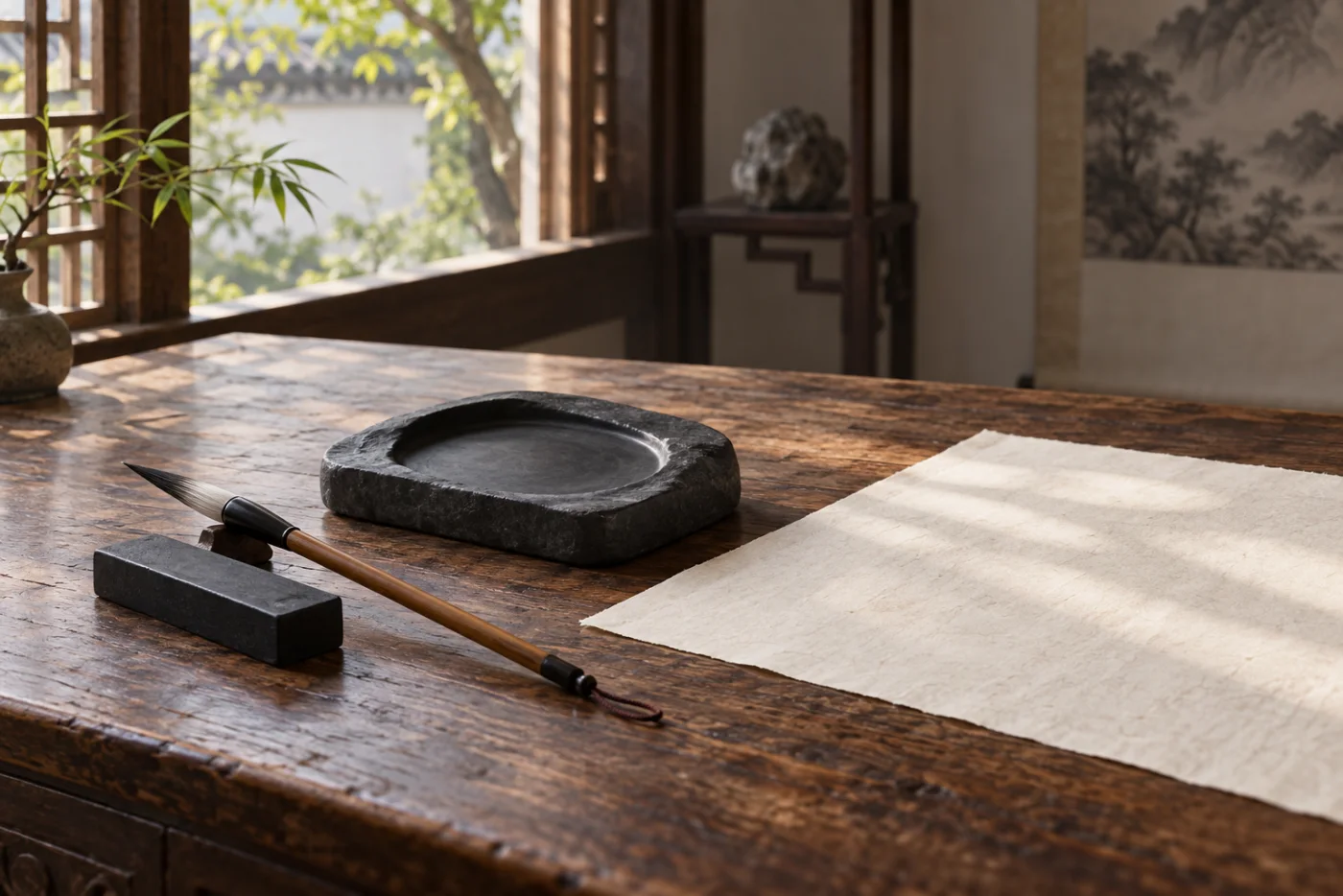
Brush, ink, paper and inkstone are the four essentials of the traditional scholar's desk. Here is what each contributes to writing and painting.
Landscape · 4 min
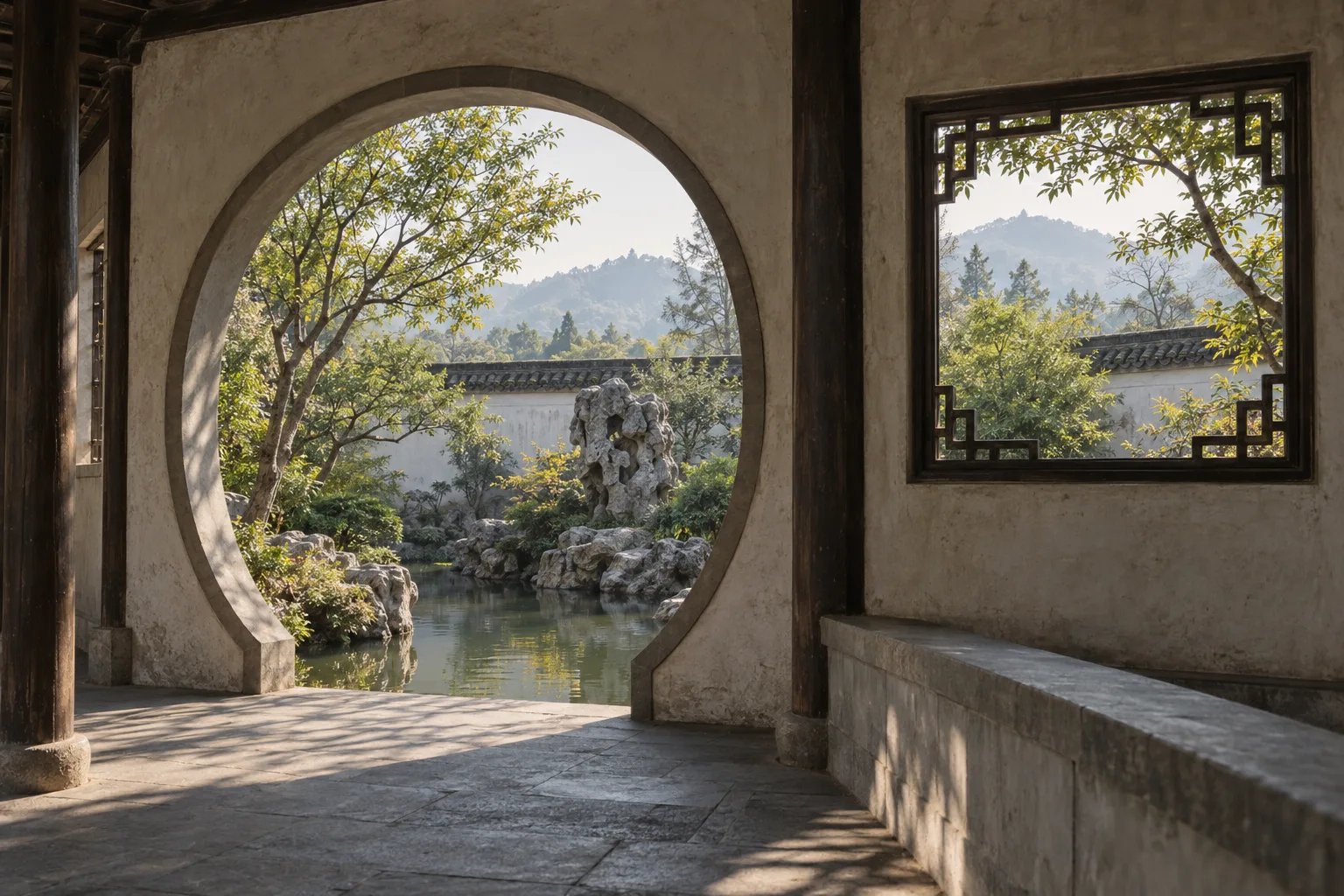
A doorway can frame a small garden; a distant hill can become part of it. Learn how position, openings and borrowed views guide the way a Chinese garden is seen.
Tea · 3 min
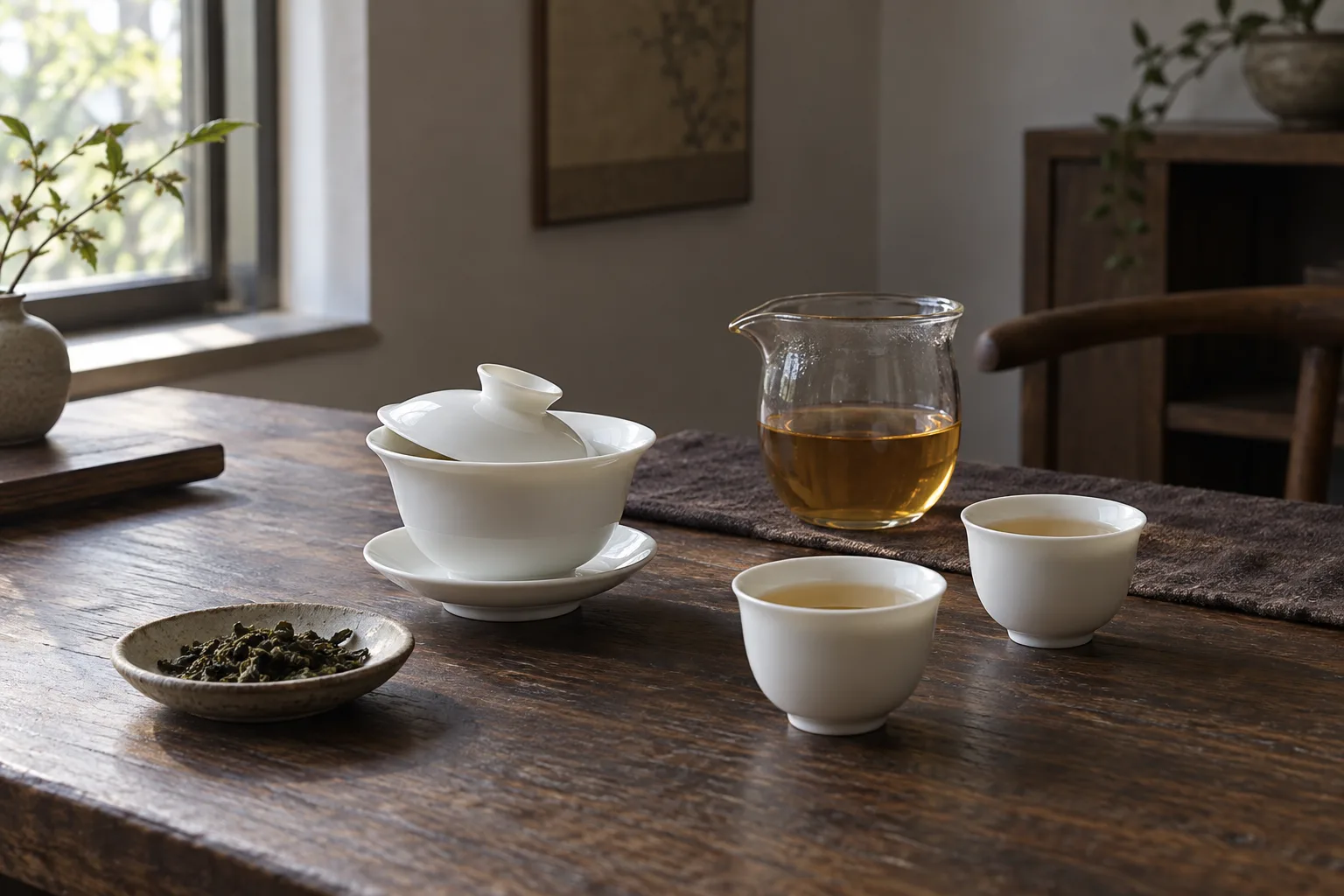
There is no single correct set of Chinese tea wares. Learn what a cup, gaiwan, teapot and serving pitcher do, then begin with only what you need.
Ritual · 2 min
A simple incense practice begins with one stick, a stable holder, and time to stay nearby while it burns.

Makers · 9 min
Jingdezhen has fired porcelain for a thousand years. We spent a week with the two people keeping that rhythm going.

Form · 3 min
In Chinese gardens and studies, a scholar's rock can evoke a mountain at a scale close enough to contemplate.